Filing bankruptcy is a stressful thing for anyone. Bankruptcy court and frightening letters from your lender can be too much to bear. With bankruptcy looming, it’s not uncommon to also be facing foreclosure.
Bankruptcy proceedings can help halt bill collections, including your mortgage lender’s foreclosure actions. This means It is still possible to sell that house before foreclosure but there are circumstances that can affect this.
Bankruptcy protection will play a role here. It’s very important that you first get sound legal advice from a bankruptcy lawyer if this is your situation.
And bankruptcy is more common than many homeowners realize, especially in Texas. In 2023, over 2,800 Chapter 7 and Chapter 13 bankruptcies were filed across the state. And total filings in Texas saw an overall 22% increase in personal bankruptcy filings from March 2024 to March 2025, ranking sixth highest among states. (source.)
Texas Bankruptcy Filing Trends by Chapter: 2021–2023
| Year | Chapter 7 Filings | Chapter 13 Filings |
|---|---|---|
| 2021 | 1,035 | 804 |
| 2022 | 1,062 | 745 |
| 2023 | 1,316 | 1,417 |
While city-level data isn’t always publicly separated, Houston, as part of the Southern District of Texas, accounts for a significant portion of these filings. Homeowners in bankruptcy often explore multiple options for resolving debt or generating cash, including estate sales to liquidate personal property alongside selling their home. Knowing your rights and the legal process under each bankruptcy chapter is crucial to making informed decisions.
So this begs the question: can you sell your house despite being in Chapter 7 or 13 bankruptcy?
In this article, we’ll discuss how to navigate your way through the Texas bankruptcy code so you can understand the choice to sell your house while navigating Chapter 7 or Chapter 13 bankruptcy.
Can I Sell My Houston House While In Chapter 7 or 13 Bankruptcy?
Although you can technically sell your house at any point during the bankruptcy process, court approval is typically required before proceeding.
That said, here is some general information to serve as an overview of Houston bankruptcy laws. Here is a quick summarized guide below.
Exploring Your Options When Selling a Houston House in Bankruptcy (Quick Guide)
This process can be complex and requires careful consideration and planning.
1. Automatic Stay
Filing bankruptcy (Chapter 7 or 13) in the Southern District of Texas (Houston Division) instantly halts all collection actions, including home sales, until court approval.
2. Chapter 7 – Trustee’s Role & Exempt Equity
In Houston-area cases, a court-appointed trustee from the Southern District of Texas oversees the liquidation of non-exempt property to repay creditors. Homeowners commonly keep exempt equity under Texas’s generous homestead law.
Once the trustee abandons the home—or the case is discharged and closed (typically 3–6 months post-filing)—you regain control and can sell freely.
3. Chapter 13 – Sale Allowed with Permission
If you file Chapter 13 in Houston, you retain your property under a 3–5-year repayment plan. Any sale requires filing a Motion to Sell with the local bankruptcy court, notifying creditors, and receiving court approval. Proceeds often influence and may modify your repayment plan.
4. Selling Before Filing Bankruptcy
Houston homeowners may sell their home and apply a homestead or wildcard exemption to protect proceeds—typically within 6 months of the sale—otherwise, funds may go to creditors.
5. Texas-Specific Advantage
Texas offers an unlimited-value homestead exemption, providing strong equity protection. Because exemptions must be claimed properly in the Southern District of Texas, consult a local bankruptcy attorney to ensure correct application.
6. Next Steps
If you’re in Houston or the surrounding counties (Harris, Fort Bend, Montgomery, etc.), consult a Houston-based bankruptcy attorney to assess timing, file necessary motions, and safeguard exemptions based on your unique situation.
The Legal Aspect of Selling a House in Houston During Bankruptcy
Every bankruptcy case is unique. Therefore, the appropriate course of action largely depends upon the specifics of your situation. When contemplating selling your house, consulting with your bankruptcy attorney or a real estate professional who’s familiar with such scenarios is essential.
Note: Although you can technically sell your house at any point during the bankruptcy process, court approval is typically required before proceeding.
When selling a house while in bankruptcy in Houston, there are several important laws to consider.
One of the key laws is the automatic stay, which is a provision that goes into effect as soon as you file for bankruptcy. The automatic stay halts all collection activities, including foreclosure proceedings and the sale of your property.
This means that you cannot sell your house without first obtaining permission from the bankruptcy court. You will need to file a motion with the court and demonstrate a valid reason for selling the property.
Another important law to be aware of is the homestead exemption. In Texas, homeowners are entitled to a homestead exemption, which provides protection for a certain amount of equity in their primary residence.
This means that if you have equity in your home, it may be exempt from being used to pay off your debts in bankruptcy. However, the exemption amount varies depending on various factors, such as whether you are single or married, and whether you have any dependents.
You’ll also need to consider any tax liens when selling the house.
It is crucial to consult with a bankruptcy attorney to determine the specific exemption amount that applies to your situation.
Types of Bankruptcy & Effects on Home Sales
Understanding the phase during which you can sell your house is crucial when navigating bankruptcy. This largely depends on whether you’ve filed for Chapter 7 or Chapter 13 bankruptcy.
Selling a Home Under Chapter 7 Bankruptcy: Trustee, Exemptions, & Timing
In a Chapter 7 bankruptcy, also known as a liquidation bankruptcy, the process goes as follows:
- You file for bankruptcy and the court places an “automatic stay” on your debts. This stops creditors from taking action to collect their debts.
- The bankruptcy trustee may choose to sell your non-exempt property to repay your creditors. If your house is exempt, it will not be sold.
- If your house isn’t exempt, you may still be able to sell it, but the proceeds will most likely go toward paying off your debt.
- Your sale can resume 3–6 months after discharge once the estate is closed.
Selling a Home Under Chapter 13: Court Approval & Plan Impacts
Chapter 13 bankruptcy, also known as a wage earner’s plan, follows a different sequence:
- Upon filing for Chapter 13 bankruptcy, an automatic stay is also placed on your debts.
- You propose a repayment plan to make installments to creditors over three to five years.
- During this period, you’re able to sell your property with the court’s approval.
It’s crucial to remember that, in both scenarios, the bankruptcy court must approve the sale of your home.
The Role of a Trustee in a Bankruptcy Home Sale
The role of your bankruptcy trustee can impact whether you’re able to sell your house. In a Chapter 7 bankruptcy, the trustee has the authority to sell non-exempt property, including homes, to repay your debts.
However, if you’re in a Chapter 13 bankruptcy, you are generally allowed to keep your homes and other assets. If you wish to sell your house during this time, it should not affect your repayment plan; nonetheless, you still need court approval.
Timing is Critical When Selling a House While in Bankruptcy
Timing – A Key Factor In Selling a House While In Bankruptcy
Selling a house while in bankruptcy is no easy task, but it’s not impossible. A critical component in this process is timing but also permission. Sellers have a short grace period to claim exemption on proceeds, or must use wildcard exemptions. (Source: Nolo.)
While in Bankruptcy: Understand Your Rights
Bankruptcy is undeniably a challenging period. However, an understanding of Chapter 7 and Chapter 13 bankruptcy, and what they each mean for your homeownership, will help you navigate these circumstances.
Chapter 7 Bankruptcy
In a Chapter 7 Bankruptcy, often known as ‘liquidation bankruptcy,’ a debtor’s assets are eliminated to repay creditors. It’s a way to get a clean slate. Here’s what you should know:
- The appointed bankruptcy trustee could liquidate your property to repay creditors.
- Some assets might be ‘exempt,’ but it varies by state.
- Generally, the process takes about 3 to 6 months.
Chapter 13 Bankruptcy
Alternatively, if you file for a Chapter 13 Bankruptcy, this permits a debtor to keep their assets and repay creditors gradually using their future income. This restructuring bankruptcy includes:
- The creation of a 3-5 year repayment plan to reimburse creditors.
- You can retain both exempt and non-exempt property.
- It can be longer and more complex than Chapter 7 bankruptcy.
Watch here to learn more about Chapter 7 and 13 Bankruptcy:
Related post: how do I sell my home if I’m behind in my mortgage?
Case Study: How We Helped a Houston Homeowner Sell During Bankruptcy
The Challenge
Tom was experiencing one of the most overwhelming financial situations someone can face. He was in the middle of bankruptcy and owned a house in the Clear Lake area that needed major repairs. The property required about $45,000 in necessary updates, and Tom had no savings to complete them.
At the same time, the bankruptcy process limited what he could do. The automatic stay prevented collections, but it also meant he needed court approval before any sale could happen. Traditional buyers would have required the home to be repaired and would have needed mortgage financing, which would take time. Time was something Tom did not have.
He was facing several pressures at once:
-
Filing for bankruptcy with court proceedings already underway
-
Property needed about $45,000 in repairs
-
No money available for improvements
-
Required bankruptcy court approval to sell
-
Traditional retail buyers would require the repairs to be completed first
-
Risk of foreclosure if the bankruptcy did not resolve
-
Needed proceeds from the sale to settle debts
-
Emotional stress of managing court requirements and the property at the same time
Tom needed to sell the property quickly and as is, but the combination of bankruptcy rules and the home’s condition made the path forward unclear.
Property Details:
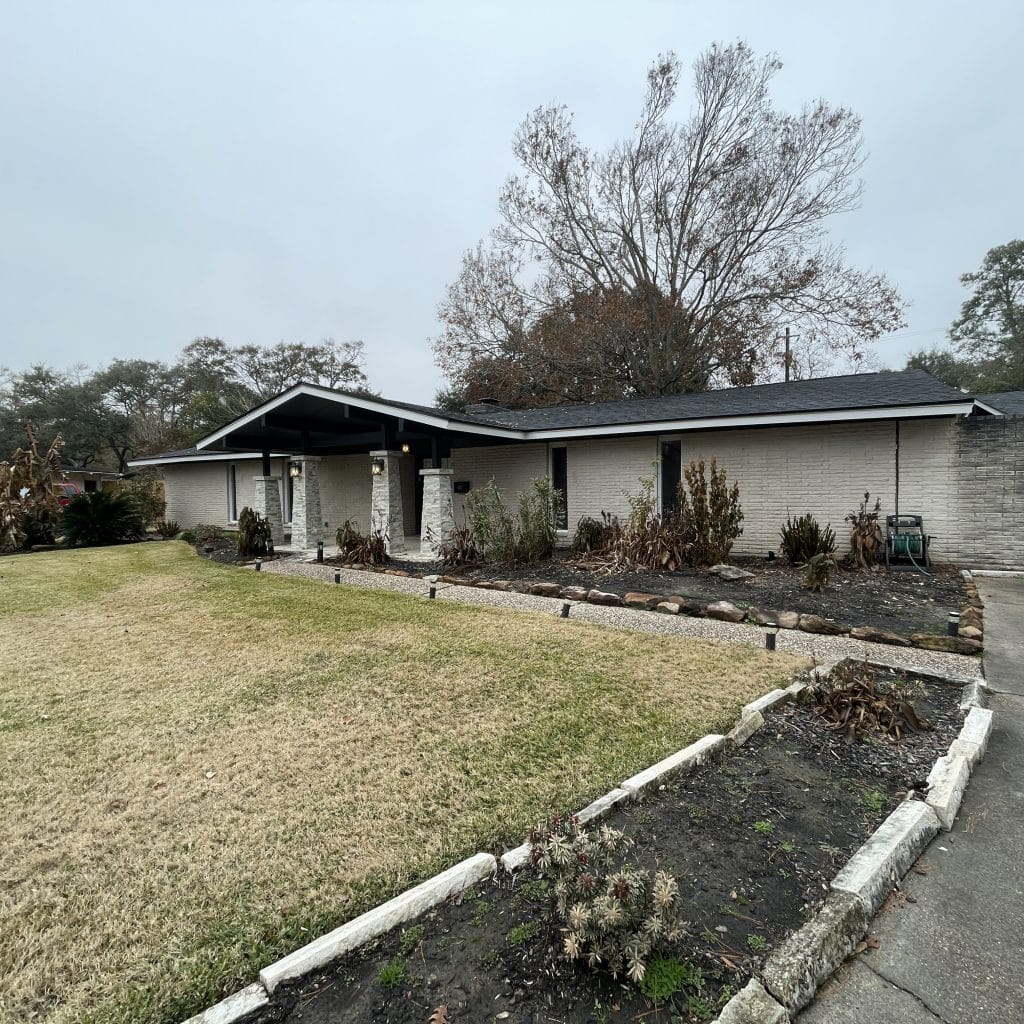
The house was located on Terrace Dr in El Lago, TX 77586, in the Clear Lake area of Harris County.
-
3 bedrooms and 3 bathrooms
-
2,659 square feet of living space
-
13,061 square foot lot
-
Built in 1963
-
Single family home
The property required a full list of repairs. Estimated work included:
-
Roof replacement
-
Foundation repair
-
Brick repair
-
HVAC replacement
-
Kitchen remodel
-
Countertops, cabinets, backsplash, and new appliances
-
New flooring
-
Complete bathroom updates
-
Interior and exterior painting
-
Window replacement
-
Fascia board replacement
Local real estate agents advised that he would need to complete these repairs first and then list the home, wait for a buyer, and go through a long closing process that required bankruptcy court approval. That was not realistic for his financial situation or his timeline.
Our Solution
When Tom contacted PPS House Buyers, we immediately focused on simplifying the process and removing obstacles.
1. We Navigated Bankruptcy Court Requirements
We coordinated with his bankruptcy attorney, understood how the automatic stay affected the sale, and ensured the necessary court permissions were obtained.
2. We Made a Fast Cash Offer
We purchased the home exactly as it sat. No repairs were required. No improvements. No inspections needed to approve work.
3. We closed in 30 days
4. We Eliminated Repair Costs and Delays
Tom did not need to spend the $45,000 the property required. He did not need to hire contractors or manage a renovation during bankruptcy.
5. We Helped Resolve the Financial Situation
Proceeds from the sale were used to address debts and support the bankruptcy resolution. This helped provide the fresh start he needed.
The Results
-
Tom saved an estimated $45,000 in repair costs
-
No out-of-pocket expense required during bankruptcy
-
Sold the home in its current condition
-
Closed in 30 days
-
Sale proceeds applied to settle debts
-
Helped move toward final bankruptcy resolution
-
Avoided foreclosure pressure
-
Avoided delays that would have occurred with a traditional listing
-
The entire process was completed within legal bankruptcy requirements and under the guidance of his attorney
Tom was able to move forward and regain stability.
Client Testimonial
“Going through bankruptcy was the hardest thing I have ever faced. My house needed $45,000 in repairs and I had no way to do them. I didn’t know how to sell with the court involved. PPS House Buyers handled everything, bought my house as is, and closed in 30 days. The sale helped me settle my debts so I could move on. They gave me a way out when I thought I didn’t have one.” — Tom
Why Work With PPS House Buyers During Bankruptcy Sales
-
Experience with Chapter 7 and Chapter 13 property sales
-
Familiarity with Southern District of Texas bankruptcy procedures
-
We work directly with your bankruptcy attorney
-
Fast cash closings to help support financial resolution
-
We buy houses in any condition
-
No repairs or upfront costs
-
We simplify a complicated legal and financial situation
Need to Sell a Home During Bankruptcy in Houston?
If you are working through Chapter 7 or 13 and need to sell your house, PPS House Buyers can help. We understand the court approval process, the automatic stay, and the urgency that comes with bankruptcy-related property sales.
We buy houses in any condition. We handle the complexity. We work with your attorney. You stay in control of your fresh start.
Call us at 281-306-5055 or request a free consultation here.
Important: Always consult with your bankruptcy attorney before selling property during bankruptcy proceedings. Court approval is usually required. PPS House Buyers does not provide legal advice.
Summary: Can I sell My House While In Chapter 7 or 13 Bankruptcy?
The process of selling a Houston house while in bankruptcy is complex and depends on the type of bankruptcy you have filed for.
In Chapter 7 bankruptcy, the court appoints a trustee who determines whether you can keep your assets or sell them to pay off your debts.
If your home equity is significantly lower than your mortgage loan, homestead exemption, sale costs, and trustee commission, it is exempted from liquidation.
Once your bankruptcy case is discharged, you are considered the official owner of the house and can proceed to sell it through the normal process without requiring approval from the court.
Your best option is to find a company experienced with these types of sales.
By selling your house quickly, you can maximize your profit while eliminating one of the emotional burdens brought about by bankruptcy.
Give us a call – Find out what PPS House Buyers can do for you. 281-306-5055
FAQs About Can I sell My House While In Chapter 7 or 13 Bankruptcy
Does Chapter 7 bankruptcy affect your house?
If you still owe on your mortgage, the lender can foreclose after 90 days if you don’t make payments if a stay has not been first entered.
How long does Chapter 7 and Chapter 13 stay on the credit report?
A Chapter 7 bankruptcy will stay on your credit report for up to 10 years from the filing date. A Chapter 13 bankruptcy generally remains for seven years from the filing date.
What is considered income for bankruptcies?
All sources of income including, business income, rental income, interest and dividends, pensions and retirement plans, disposable income, and unemployment income.